


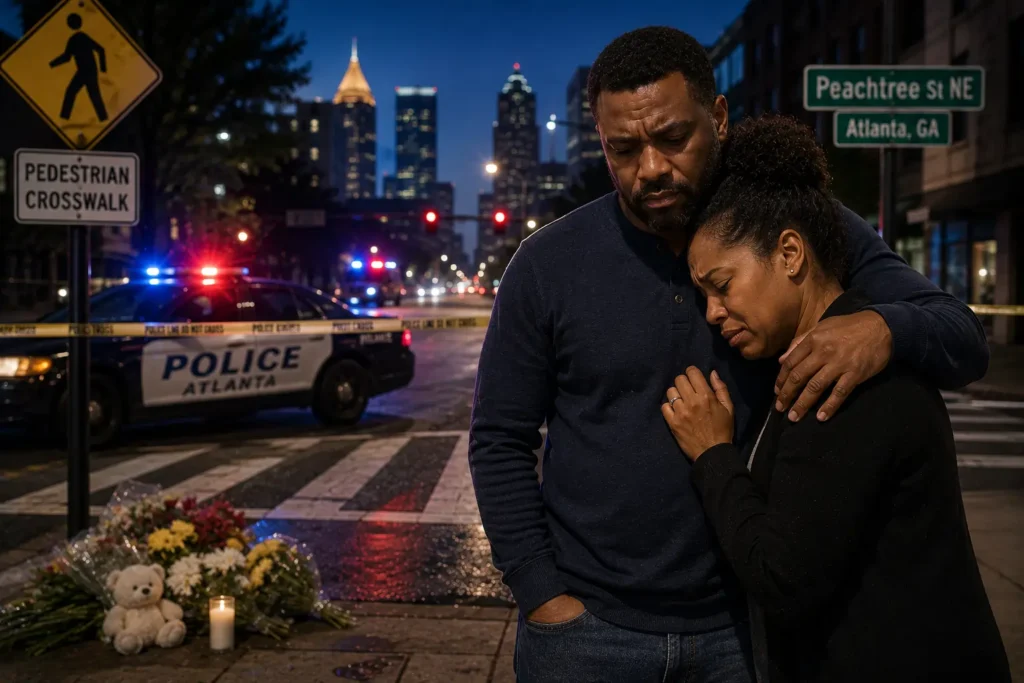
When a driver is charged with vehicular homicide after killing or seriously injuring a pedestrian in Atlanta, that criminal case runs on a separate track from your family’s civil claim. A conviction can strengthen your case, but you do not have to wait for the criminal case to resolve before pursuing compensation, and Georgia law gives your family only two years from the date of death to file a wrongful death lawsuit.
When a Pedestrian Accident Becomes a Criminal Case
Atlanta sees pedestrian deaths on its streets every year, and in recent months local news has reported multiple fatal crashes where drivers faced vehicular homicide charges after striking pedestrians near downtown crosswalks. Georgia law separates these cases into two categories under O.C.G.A. § 40-6-393.
First-degree vehicular homicide applies when the driver was under the influence of alcohol or drugs, fleeing the scene, or driving recklessly and a death results. This is a felony that can carry years in prison. Second-degree vehicular homicide applies when a driver causes a death by violating a traffic law that is not itself a serious offense, such as running a stop sign. That charge is typically a misdemeanor.
For families in Atlanta, seeing criminal charges filed can feel like justice is already underway. But criminal charges do not put money in your pocket, pay for a funeral, or replace a spouse’s lost income. That is where a separate wrongful death claim comes in.
The Criminal Case and the Civil Case Are Not the Same Thing
Georgia allows a criminal prosecution and a civil wrongful death or injury claim to move forward independently of one another. The district attorney’s office prosecutes the criminal case on behalf of the state of Georgia. Your family, through a pedestrian accident attorney, pursues the civil case on behalf of the victim and surviving family members.
These two processes have different goals, different burdens of proof, and different outcomes.
Different Burden of Proof, Different Outcomes, Different Timelines
A criminal conviction requires proof beyond a reasonable doubt. A civil case only requires a preponderance of the evidence, meaning it is more likely than not that the driver was negligent. This is a much lower bar, which means your family may be able to win a civil claim even in situations where a criminal case results in an acquittal or reduced charge.
A criminal conviction can result in prison time, probation, or fines paid to the state. A civil claim results in compensation paid directly to the victim’s family, covering medical bills, funeral expenses, lost income, and the loss of companionship and support.
Criminal cases can take a year or more to resolve, especially if the case goes to trial. Georgia’s statute of limitations for a wrongful death claim is generally two years from the date of death under O.C.G.A. § 9-3-33, and this clock typically keeps running regardless of how long the criminal case takes. Waiting for a criminal verdict before speaking with an attorney can put your family’s right to compensation at risk.
Why a Criminal Conviction Can Still Help Your Civil Case
While the two cases are legally separate, evidence and outcomes from one can influence the other. If a driver is convicted of vehicular homicide, that conviction can often be used as strong evidence of fault in the related civil claim, sometimes making liability easier to establish. Police reports, breathalyzer results, dashcam footage, and witness statements gathered for the criminal investigation frequently become key pieces of evidence in the civil case as well.
An Atlanta personal injury attorney who understands how to request and use this evidence can move quickly to preserve it, since some records tied to a criminal investigation are not automatically available to civil attorneys and may require formal requests or subpoenas.
What Compensation May Be Available to Your Family
A civil wrongful death or serious injury claim following a pedestrian accident in Atlanta may allow recovery for:
- Medical expenses from emergency treatment, hospitalization, or long-term care
- Funeral and burial costs
- Lost wages and lost future earning capacity of the victim
- Loss of the victim’s care, companionship, and guidance for surviving family members
- Pain and suffering experienced by the victim before death, when applicable
- Punitive damages in cases involving DUI, reckless driving, or fleeing the scene
Georgia law also allows punitive damages in cases where a driver’s conduct shows willful misconduct or a conscious disregard for the safety of others, which frequently applies in DUI-related pedestrian fatalities.
What to Do If Your Family Is Facing This Situation
If a loved one has been killed or seriously injured by a driver in Atlanta, and criminal charges have been filed, here is what typically needs to happen on the civil side:
- Contact an attorney promptly, even while the criminal case is pending. Evidence disappears quickly, and some records require immediate requests. You can contact KP Law Group for a free consultation.
- Avoid giving recorded statements to the driver’s insurance company without legal guidance.
- Keep records of all medical treatment, funeral costs, and financial losses connected to the accident.
- Understand that a plea deal or reduced criminal charge does not determine the outcome of your civil claim.
- Ask your attorney to monitor the criminal case for evidence that may support your civil claim.
Fulton and DeKalb County Considerations
Pedestrian fatalities involving criminal charges in Atlanta typically fall under Fulton County or DeKalb County jurisdiction depending on where the crash occurred. Both the Fulton County District Attorney’s Office and DeKalb County District Attorney’s Office prosecute vehicular homicide cases, while your civil claim would generally be filed in the state or superior court covering the county where the incident happened. An attorney familiar with both court systems can help your family understand how local procedures and court schedules may affect your case timeline.
FAQ
Q1: Do I have to wait until the criminal case is over before filing a civil claim?
A: No. Georgia’s statute of limitations for wrongful death claims generally runs two years from the date of death, regardless of the criminal case’s timeline. Waiting for a criminal verdict can jeopardize your family’s ability to recover compensation.
Q2: What if the driver is found not guilty in the criminal case?
A: A civil case has a lower burden of proof than a criminal case. It is possible for a driver to be acquitted criminally while still being found liable in a civil claim for the same accident.
Q3: Can my family recover punitive damages if the driver was drunk?
A: Georgia law allows punitive damages in cases involving conduct like driving under the influence, which shows a conscious disregard for the safety of others. An attorney can evaluate whether your case qualifies.
Q4: Who prosecutes vehicular homicide cases in Atlanta?
A: The local district attorney’s office, such as the Fulton County or DeKalb County District Attorney, prosecutes vehicular homicide charges on behalf of the state. Your family’s civil claim is a separate legal action handled by your own attorney.
Q5: What evidence from the criminal case can help my civil claim?
A: Police reports, toxicology results, witness statements, and traffic camera or dashcam footage gathered during the criminal investigation can often be used to help establish fault in your civil case.
Call to Action
If your family is dealing with the aftermath of a pedestrian accident in Atlanta involving criminal charges against the driver, you do not have to navigate the civil claim process alone. KP Law Group provides Fierce and Fearless Representation for families across Fulton, DeKalb, and Cobb Counties.
Learn more about our Pedestrian Accident and Wrongful Death services, or review our Case Results to see how we have helped other clients.
Call 404-551-4727 or schedule your Free Fierce and Fearless Case Review today.