


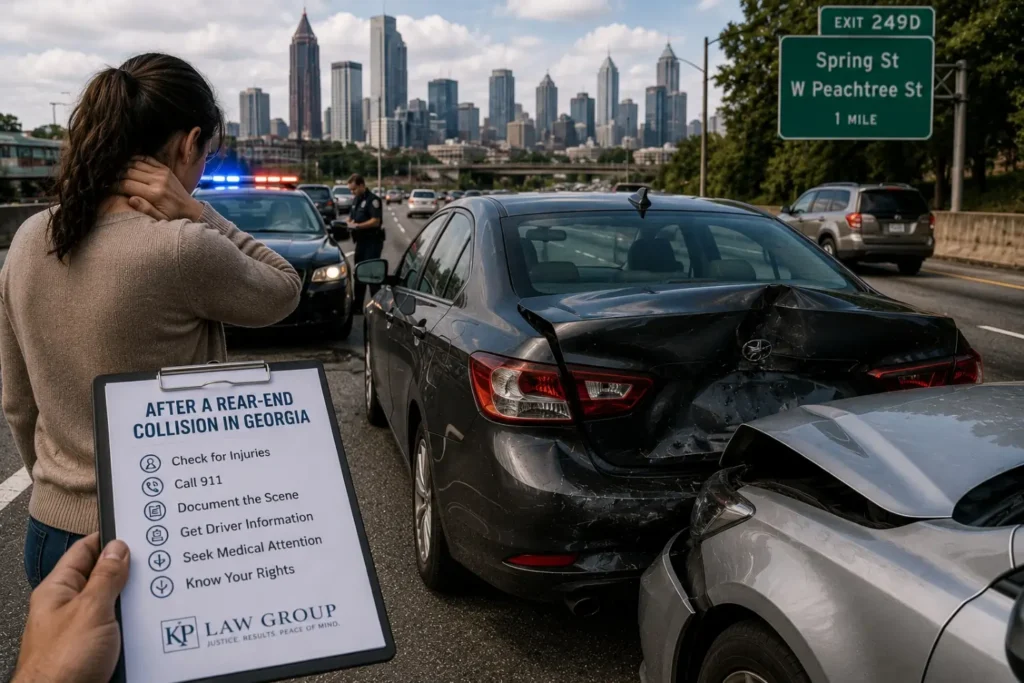
Why Rear-End Collisions Are So Common in Atlanta
Atlanta consistently ranks among the worst cities in the country for traffic congestion. Bumper-to-bumper conditions on I-75, I-85, I-20, and I-285 create prime conditions for rear-end crashes. Common causes include distracted driving (especially phone use), tailgating, failing to adjust speed for heavy traffic, inattention at signals and intersections, and sudden braking in merge zones and construction areas. These are entirely preventable crashes — and that matters for your case.
Who Is at Fault in a Georgia Rear-End Collision?
Georgia law imposes a duty on every driver to maintain a safe following distance and come to a complete, controlled stop when necessary. When a driver rear-ends you, the presumption is that they were following too closely or failed to pay attention.
Under Georgia’s modified comparative negligence rule, you can recover compensation as long as you were less than 50% responsible. In most rear-end crashes, the striking driver bears the vast majority of fault — which means you have a strong claim from the start.
That said, insurance adjusters will work quickly to shift blame onto you — suggesting you braked suddenly, had non-functioning brake lights, or cut off the driver. This is precisely why having an attorney from the beginning matters.
Common Injuries from Rear-End Collisions in Atlanta
Whiplash and Soft Tissue Injuries
Whiplash is the most common rear-end collision injury. Symptoms often appear 24-72 hours after the crash: neck stiffness, shoulder pain, limited range of motion, headaches at the base of the skull, and chronic muscle tension. Left untreated, whiplash can become a long-term, disabling condition that affects your ability to work and function normally.
Herniated or Bulging Discs
The force of impact can compress the spine and cause discs to herniate, pressing on nerves and creating radiating pain, tingling, or numbness down the arms or legs. These injuries frequently require imaging, specialist visits, injections, and sometimes surgery.
Traumatic Brain Injuries
Even without hitting your head on a surface, the rapid deceleration in a rear-end crash can cause the brain to move inside the skull, resulting in a concussion or traumatic brain injury. TBI symptoms — cognitive fog, mood changes, sleep disruption, and headaches — are often mistaken for stress or general fatigue.
Back and Lumbar Injuries
Low back pain after a rear-end collision is extremely common and can indicate lumbar disc injuries, facet joint damage, or muscle and ligament tears — all of which may require prolonged physical therapy or surgical intervention.
Broken Bones and Facial Injuries
In high-speed rear-end crashes, the secondary impact of being pushed into the car ahead, or hitting the steering wheel or deploying airbag, can cause fractures and facial trauma. Wrist fractures are also common as drivers instinctively brace for impact.
Why ‘I Feel Fine’ Can Be the Most Dangerous Assumption
One of the worst mistakes rear-end accident victims make is declining a medical evaluation at the scene. Adrenaline is real. It masks pain and creates a false sense of wellness when your body is actively managing a significant injury.
Seeing a doctor within 24-72 hours of your accident serves two critical purposes: it protects your health, and it creates a medical record that directly connects your injuries to the crash. Without that record, insurance companies will argue your injuries were pre-existing or unrelated.
What Is a Rear-End Collision Claim Worth in Georgia?
The value of your claim depends on your specific facts, but the key drivers are: current and projected future medical expenses; lost wages and reduced earning capacity; pain and suffering and emotional distress; loss of enjoyment of life; and property damage.
What the Insurance Company Will Try to Do
After a rear-end collision, the at-fault driver’s insurer will move fast. They may contact you within days, asking for a recorded statement and offering a quick settlement. That offer is an attempt to close your claim for less than it is worth before you fully understand the extent of your injuries.
What to Do After a Rear-End Collision in Atlanta
- Call the police. Even in minor crashes, get a police report.
- Get medical care immediately. See a doctor within 24-72 hours.
- Document everything. Photograph vehicle damage, road conditions, and injuries.
- Contact an Atlanta rear-end collision attorney.
The Statute of Limitations in Georgia
You have two years from the date of the crash to file a personal injury lawsuit in Georgia. Missing this deadline forfeits your right to compensation permanently.
Why KP Law Group Is the Right Choice
Kristen Pitts, Esq. founded KP Law Group to give Atlanta-area injury victims fierce, fearless representation. We represent clients throughout Fulton, DeKalb, and Cobb Counties. You pay nothing unless we win.
Frequently Asked Questions
1. I had a pre-existing neck injury. Can I still file a claim?
Yes. Georgia’s eggshell plaintiff doctrine protects victims with pre-existing conditions. The at-fault driver takes you as they find you, meaning they are still liable for any worsening of your condition caused by the crash.
2. The other driver claims my brake lights were out. What do I do?
That claim must be supported with evidence. A police report, witness statements, and surveillance or intersection camera footage can help refute it.
3. The adjuster wants a recorded statement. Should I give one?
Not without consulting an attorney first. Recorded statements are routinely used to find inconsistencies that reduce or eliminate your claim.
4. My car barely has any damage. Does that mean my injury claim is weak?
No. Low-speed rear-end collisions can cause significant soft tissue and disc injuries. Insurance adjusters will use minor vehicle damage as a shield.
5. How long will my rear-end collision case take to settle?
Most straightforward cases settle in six to twelve months. Cases involving disputed liability or complex injuries may take longer.