


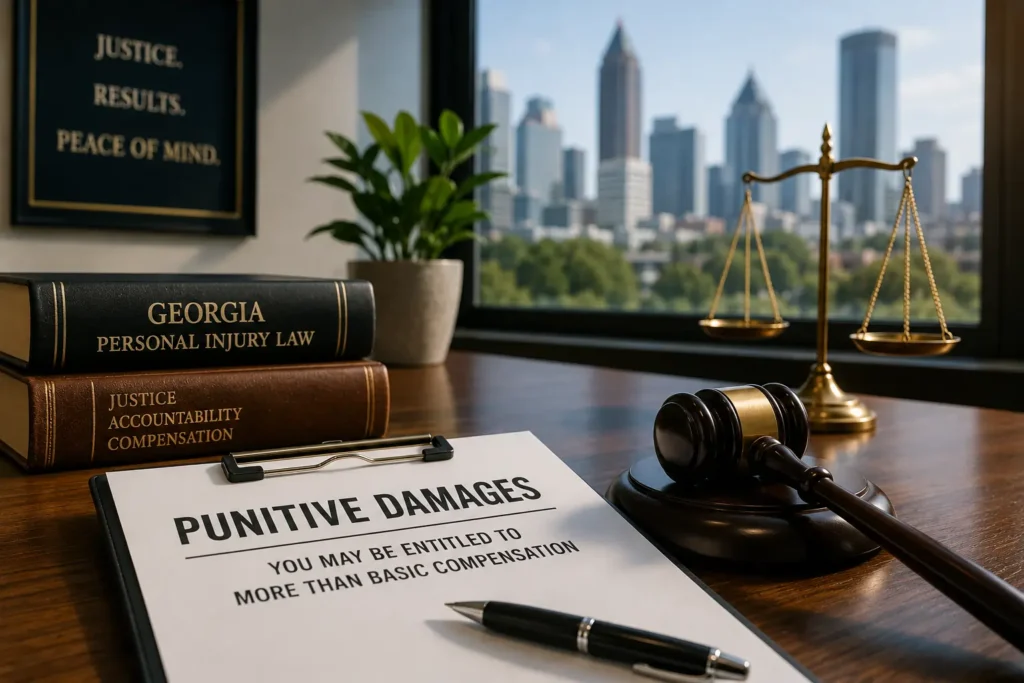
What Are Punitive Damages?
Punitive damages, sometimes called exemplary damages, are an additional category of damages awarded in civil cases. They go beyond compensatory damages, which cover your actual losses, and are intended to punish the defendant for extreme behavior and deter others from acting the same way.
Under Georgia Code Section 51-12-5.1, punitive damages may be awarded in cases where the defendant’s actions showed willful misconduct, malice, fraud, wantonness, oppression, or that entire want of care which would raise the presumption of conscious indifference to consequences.
In plain terms, this means the defendant did not just make a mistake. They acted with intentional wrongdoing, complete disregard for other people’s safety, or deliberate cruelty.
When Do Punitive Damages Apply in Georgia?
Not every injury case qualifies. Georgia courts apply a strict standard, and not every act of negligence rises to this level. Here are the most common situations where punitive damages may apply:
Drunk or Drugged Driving
If the driver who hit you was under the influence of alcohol or drugs at the time of the crash, punitive damages are squarely on the table. Georgia courts routinely award punitive damages in DUI crash cases because driving impaired demonstrates conscious disregard for everyone else on the road.
Extreme Speeding or Reckless Driving
A driver going 40 miles per hour over the speed limit on I-285 in Atlanta, or participating in illegal street racing, is not just negligent. That behavior can rise to the level of wanton misconduct that justifies punitive damages.
Deliberate or Malicious Acts
If someone intentionally caused your injuries, such as road rage incidents where a driver deliberately struck your vehicle, punitive damages may apply.
Corporate or Employer Misconduct
Large companies, trucking carriers, and property owners who repeatedly ignored safety violations or concealed known dangers may face punitive damages when those failures cause serious injuries in Fulton County, DeKalb County, Cobb County, or elsewhere in the Atlanta area.
The Standard of Proof: Clear and Convincing Evidence
In most personal injury cases in Georgia, you prove liability by a preponderance of the evidence, meaning it is more likely than not that the defendant caused your harm. For punitive damages, Georgia law requires clear and convincing evidence of the defendant’s culpable conduct. This is a significantly higher bar.
Clear and convincing evidence means the evidence must produce in the mind of the fact-finder an abiding conviction that the claim is highly probable. Your attorney must build a stronger evidentiary record to pursue punitive damages, often relying on prior incidents, internal communications, blood alcohol test results, black box data, or other direct evidence of the defendant’s state of mind and conduct.
Georgia’s $250,000 Cap on Punitive Damages
Georgia law caps punitive damages at $250,000 in most personal injury cases. However, there are critical exceptions every Atlanta victim should understand.
The DUI Exception
When the defendant was under the influence of alcohol or drugs at the time of the incident, there is no cap on punitive damages. This exception exists because the Georgia legislature made a deliberate policy decision that impaired drivers who injure or kill others should face unlimited financial punishment.
The Intent Exception
When a defendant specifically intended to harm the plaintiff, the cap also does not apply.
The 75 Percent State Rule
In cases where punitive damages are capped and the defendant is found liable, 75 percent of any punitive damages award goes to the State of Georgia. Only 25 percent goes to the plaintiff.
This rule does not apply in DUI exception cases, which is another reason the DUI exception carries such significant weight.
How Punitive Damages Must Be Requested
Punitive damages must be specifically requested in the original complaint. If your attorney does not include a claim for punitive damages from the beginning, you typically cannot add them later.
The jury decides whether punitive damages are appropriate in a separate phase of the trial, after determining liability and compensatory damages.
How Punitive Damages Affect Settlement Negotiations
Most personal injury cases in Atlanta settle before trial. When punitive damages are properly pled and well-supported by evidence, they significantly increase settlement leverage.
Insurance companies and corporate defendants know that a sympathetic Atlanta jury could deliver a large punitive damages verdict. That threat of exposure often produces higher settlement offers than what would otherwise be available in a standard negligence case.
Examples of Cases Where Punitive Damages May Apply
Punitive damages have been awarded or may apply in Georgia cases involving:
- Drunk drivers who caused serious or fatal crashes on Atlanta area highways
- Trucking companies that knowingly violated hours-of-service rules and concealed those violations
- Property owners who knew about dangerous conditions and took no steps to repair them
- Defendants who fled the scene after causing serious injuries
- Employers who pushed workers to drive fatigued on tight delivery schedules
FAQ
1. What is the difference between compensatory and punitive damages in Georgia?
Compensatory damages cover your actual losses, including medical bills, lost wages, and pain and suffering. Punitive damages go on top of that and are designed to punish the defendant for extreme misconduct and deter similar behavior. You must prove punitive damages by clear and convincing evidence.
2. Is there a cap on punitive damages in Georgia?
Georgia caps punitive damages at $250,000 in most personal injury cases. However, there is no cap when the defendant was under the influence of alcohol or drugs at the time of the incident, or when the defendant specifically intended to cause harm.
3. How do I know if my case qualifies for punitive damages?
Cases involving drunk driving, extreme reckless conduct, intentional acts, or corporate defendants who knowingly ignored safety rules are the most common candidates. An experienced Atlanta personal injury attorney can review your case and advise whether punitive damages apply.
4. Do I need to request punitive damages from the beginning of my case?
Yes. Under Georgia law, you must specifically plead punitive damages in your original complaint. Failing to request them at the start typically means you cannot add them later.
5. Can I get punitive damages if the driver who hit me was drunk?
Yes. DUI crashes are one of the most common situations where Georgia courts award punitive damages. The $250,000 cap does not apply in DUI cases, meaning a jury can award an amount they believe is necessary to punish the defendant.
CALL TO ACTION
If you were seriously injured in Atlanta or anywhere in Georgia and you believe the other party acted with reckless indifference, intentional misconduct, or while impaired, KP Law Group wants to hear your story. We offer free case evaluations and fight to recover every dollar the law allows, including punitive damages when the facts support it.
404-551-4727 | Free Fierce and Fearless Case Review