


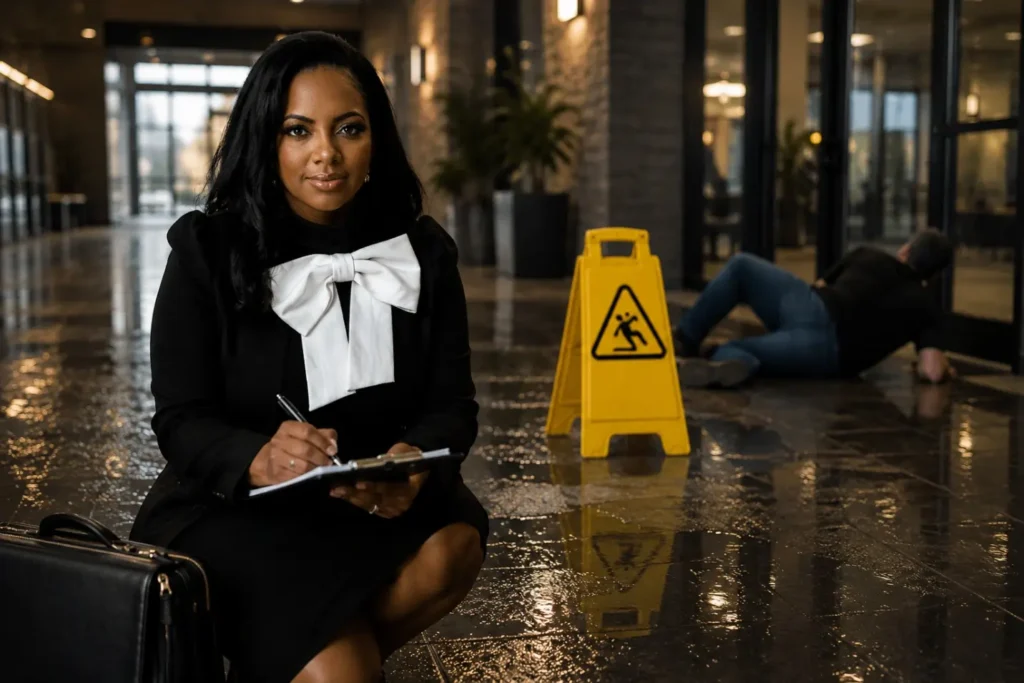
When a business in Atlanta fails to maintain safe conditions and you get hurt as a result, Georgia premises liability law gives you the right to pursue compensation. To win, you must show the owner knew or should have known about the hazard and failed to fix it or warn you. You generally have two years to file a claim, but evidence disappears fast act quickly.
You were not being careless. You were shopping, dining, getting your car serviced, or walking through an apartment complex parking garage — doing something ordinary. Then a wet floor with no warning sign, a broken step no one bothered to fix, or a parking lot pothole that had been there for months sent you to the ground. Now you are dealing with a broken wrist, a torn ligament, or worse.
Slip and fall accidents at Atlanta businesses are more common than most people realize, and more serious. Falls are a leading cause of traumatic brain injury in Georgia, and the injuries can carry long rehabilitation timelines and high medical bills. The question is not whether you were hurt. The question is whether the property owner is legally responsible.
What Is Premises Liability in Georgia?
Premises liability is the area of Georgia law that holds property owners and occupiers responsible for injuries that happen on their property due to negligent maintenance or failure to warn. When you visit a business as a customer, you are what the law calls an invitee — the highest level of protection available.
Under Georgia law (O.C.G.A. Section 51-3-1), property owners have a duty to exercise ordinary care to keep their premises safe for invitees and to warn of any hidden dangers they are aware of or should be aware of. That last phrase is important. An owner cannot simply ignore a hazard and claim they did not know about it. If the hazard was visible long enough that a reasonable inspection would have revealed it, the law treats that as constructive knowledge.
The same premises liability principles apply to pedestrian accidents in Atlanta parking decks and garages, where poor lighting or blind corners can make a property owner just as responsible as the driver.
What Must You Prove in an Atlanta Slip and Fall Case?
To successfully pursue a slip and fall claim against a business in Atlanta, you generally need to establish:
1. A hazardous condition existed. A wet floor, uneven pavement, broken railing, poor lighting, debris in an aisle, or any other condition that created an unreasonable risk of harm.
2. The owner knew or should have known about the hazard. If an employee caused the hazard, that satisfies actual knowledge. If the hazard existed long enough to be caught during routine inspection, that is constructive knowledge.
3. The owner failed to correct or warn about the hazard. The failure to act or warn is where the negligence lies.
4. The hazard caused your injuries. Medical documentation from the day of the incident is critical.
5. You suffered actual damages. Medical bills, lost wages, pain and suffering — your compensation is tied to demonstrable harm.
Where Do Slip and Falls Happen Most in Atlanta?
In Metro Atlanta, premises liability claims arise in a wide range of locations:
- Grocery stores and supermarkets — wet floors, spills, floor mat hazards
- Restaurants — kitchen grease tracked onto dining floors
- Retail stores — merchandise on floors, uneven thresholds
- Parking lots and parking garages — potholes, poor drainage, inadequate lighting
- Apartment complex common areas and stairwells
- Hotels and hospitality venues
- Shopping centers and strip malls across Fulton, DeKalb, and Cobb Counties
- Gas stations and convenience stores
Each setting comes with its own inspection and maintenance obligations. A restaurant is expected to inspect its floors far more frequently than a storage facility. The nature of the business shapes what reasonable care looks like.
The Notice Problem — and How to Beat It
Insurance companies defending Atlanta businesses almost always raise the notice defense: We did not know about the hazard, so we are not responsible. This is the most common reason slip and fall claims are initially denied.
Here is how to counter it:
- Surveillance footage. Most Atlanta businesses have security cameras. Footage can show how long a hazard existed before your fall and whether employees walked past it. This footage gets overwritten quickly — often within 30 to 90 days. Your attorney needs to send a litigation hold letter immediately.
- Incident reports. Businesses are required to create incident reports for customer injuries. Request a copy before you leave the premises.
- Maintenance and inspection logs. Through discovery in a lawsuit, your attorney can request all cleaning schedules and inspection records. Gaps in those records speak volumes.
- Witness statements. Employees and other customers who saw the hazard or the fall can provide critical testimony.
- Prior complaints. If other customers complained about the same hazard before your fall, that is evidence of actual knowledge.
Contributory Fault in Georgia Slip and Fall Cases
Georgia follows modified comparative fault. If you were partially responsible for your fall, your compensation can be reduced proportionally. If you are found more than 50 percent at fault, you cannot recover. Expect the business’s insurance company to argue contributory fault aggressively. An experienced Atlanta slip and fall lawyer knows how to document the actual visibility of hazards and the inadequacy of warnings to establish the business as primarily responsible.
What Is a Slip and Fall Case Worth in Georgia?
There is no standard number. The value of a premises liability claim depends on the severity and permanence of your injuries, your total medical expenses, lost wages, pain and suffering, the strength of the evidence, and the defendant’s insurance coverage limits. Minor falls with limited treatment may settle for a few thousand dollars. Serious injuries — hip fractures, spinal injuries, or traumatic brain injuries — can result in settlements or verdicts of several hundred thousand dollars or more.
How Long Does a Slip and Fall Claim Take in Georgia?
Many premises liability cases in Atlanta settle within 6 to 18 months of retaining an attorney. Cases involving serious injuries often take longer because you need to understand the full scope of your medical treatment before settling. KP Law Group prepares every case as if it is going to trial, which makes settlement negotiations more effective.
Georgia’s statute of limitations for slip and fall claims is generally two years from the date of injury (O.C.G.A. Section 9-3-33). Do not wait to consult an attorney — surveillance footage and inspection records disappear fast.
FAQ
Q: I fell in a store but did not see any warning sign. Does that automatically mean the store is liable?
A: Not automatically, but the absence of a warning sign is strong evidence in your favor. You still need to show the owner knew or should have known about the hazard. An attorney can help you build that evidence.
Q: Can I file a claim if I was wearing casual footwear?
A: Yes. Your footwear may come up in a comparative fault argument, but it does not bar your recovery unless you are found more than 50 percent at fault. The reasonableness of your footwear in context matters.
Q: The store manager apologized. Does that mean they admitted fault?
A: Not necessarily in a legal sense. Get the incident report before leaving the premises.
Q: What if I slipped on rainwater near the entrance of an Atlanta business?
A: This is common during Georgia’s rainy season. Businesses must take reasonable steps to manage foreseeable water tracked in from outside — mats, drainage, and warning signs. An attorney can help you document the duration and visibility of the hazard.
Q: How much does it cost to hire a slip and fall lawyer in Atlanta?
A: KP Law Group handles premises liability cases on a contingency fee basis. You pay nothing unless we recover for you. There are no upfront fees or costs.
404-551-4727 | Free Fierce and Fearless Case Review
Hurt in a slip and fall at an Atlanta business? Hold negligent property owners accountable. Call 404-551-4727 for a free case review.