


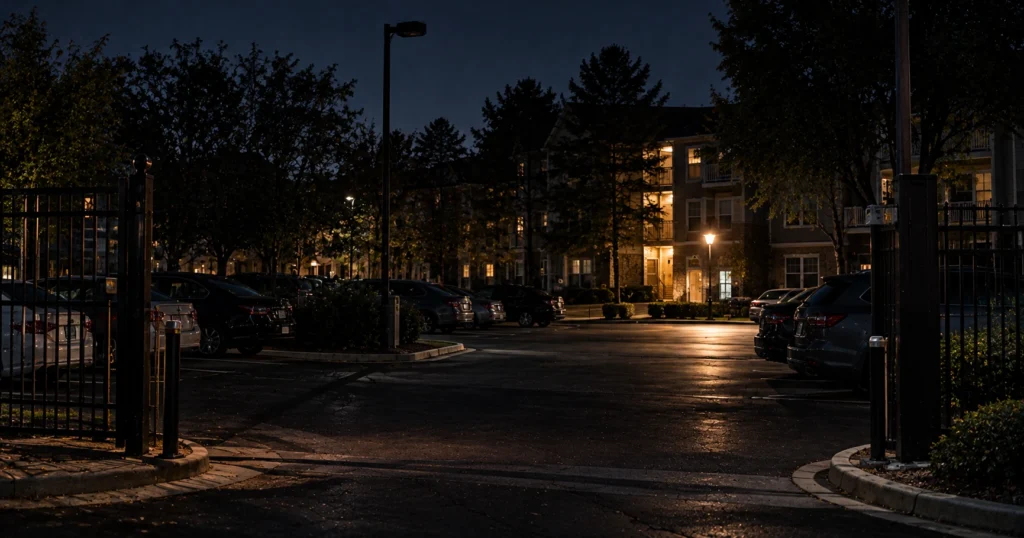
Negligent security claims let a person hurt in a crime sue the property owner when poor security made the crime likely. Since April 21, 2025, Georgia’s SB 68 (O.C.G.A. §§ 51-3-50 through 51-3-57) has made these claims harder: victims must show the crime was reasonably foreseeable and tied to a known hazard, and juries must assign fault to the criminal. These cases can still succeed, but evidence like prior incidents and broken locks, cameras, or lights must be saved fast.
You went home. You parked your car. You walked to the store. You used the ATM. And then someone attacked you.
After a crime, many victims ask the same question: why was nobody keeping this place safe? If you were hurt on someone else’s property, a negligent security lawyer in Atlanta may be able to help you hold the owner accountable. But Georgia changed the rules in 2025. Here is what you need to know.
What Is a Negligent Security Claim?
A negligent security claim is a type of premises liability case. It says a property owner or manager failed to take reasonable steps to protect people who were lawfully on the property, and that failure helped a crime happen.
The criminal is responsible for the crime. But the owner may also be responsible if the danger was known and the owner did too little. These claims often arise at:
- Apartment and condo complexes.
- Parking lots and parking decks.
- Hotels and motels.
- Shopping centers, gas stations, and convenience stores.
- Bars, clubs, and event venues.
- ATMs and bank lots.
- Hospitals and office buildings.
Negligent security is one type of premises liability claim. Property owners may be responsible for certain injuries when they fail to maintain reasonably safe conditions or address foreseeable dangers.
How Georgia’s SB 68 Changed Negligent Security Law
In April 2025, Georgia passed a major tort reform package called SB 68. One part of it created a new set of rules for these cases at O.C.G.A. §§ 51-3-50 through 51-3-57. The negligent security rules apply to claims that arose on or after April 21, 2025. Older claims follow earlier law, including a 2023 Georgia Supreme Court decision, CVS Pharmacy v. Carmichael.
If you were hurt before that date, the rules for your case may be different. A lawyer can tell you which set applies.
The New Rules in Plain Words
- The crime must have been reasonably foreseeable. Owners are not expected to predict every crime.
- Foreseeability requires supporting evidence. A specific warning or earlier similar crimes on or near the property may be relevant. Georgia’s law considers how close and how similar those earlier incidents were.
- The attacker must have used a qualifying dangerous condition on the property. Examples may include a broken gate, a dead light, or a lock that did not work.
- The owner must have failed to use ordinary care. Evidence must help establish that the owner’s failure to address the relevant condition contributed to the incident.
- The owner is not required to use extreme measures or act as the police. The circumstances and applicable statutory requirements determine what reasonable security measures were required.
This is a higher bar than many victims expect. But a strong case can still meet it.
For more information about the broader changes, read our guide to Georgia SB 68 tort reform and its impact on personal injury settlements.
Fault Is Split With the Criminal
SB 68 also changed how juries divide blame. A jury must assign a share of fault to the person who committed the crime, along with the property owner. The law provides that if the jury does not assign the criminal a reasonable share of fault, the judge must set aside the verdict and order a new trial.
If the owner is given more blame than the criminal, the law also creates a presumption that the allocation may be unreasonable. This makes cases harder to value and harder to win. It is a big reason to work with a lawyer who understands the new rules.
Who Can Bring a Negligent Security Claim in Atlanta?
The law treats people on a property in different ways. Invitees are people there for a business purpose or at the owner’s invitation, such as customers, tenants, and guests. They generally have the strongest basis for a premises liability claim. Licensees, such as social guests, may face a different and more limited legal standard. Trespassers generally have more limited protections, subject to applicable exceptions.
The law also identifies situations where a property owner may not be liable. These include certain injuries on single-family residential property, incidents that happen off the premises, and cases where the injured person was committing specified crimes. The precise statutory requirements and exceptions matter, so each case must be evaluated on its facts.
If you were injured at an apartment complex, you may also find our guide helpful: Can you sue a landlord for an apartment injury in Atlanta?
What Evidence Wins a Negligent Security Case?
Because the law focuses on what the owner knew and whether a dangerous condition contributed to the crime, evidence of prior notice is key. Evidence can include:
- Police reports and 911 call records: Records relating to the property and nearby area, including earlier robberies, assaults, or shootings.
- Tenant complaints: Emails, texts, or written reports about broken locks, gates, cameras, or lights.
- Maintenance logs and repair requests: Records showing whether safety problems were reported and whether repairs were delayed or ignored.
- Security contracts and patrol logs: Documents showing the security services promised and the services actually provided.
- Surveillance video: Footage that may be erased in 30 to 90 days, depending on the system.
- Photographs of the scene: Images showing dark areas, missing cameras, broken locks, or open gates.
- Social media posts and online reviews: Public reports that may help establish whether the property owner knew about recurring safety concerns.
Do not wait. Footage and records can disappear fast. A lawyer can send a preservation letter requesting that the property owner retain relevant evidence.
What Compensation May Be Available?
Victims of violent crime can face significant financial and personal losses. A negligent security claim may seek compensation for:
- Hospital bills and surgery.
- Rehabilitation, therapy, and counseling.
- Lost wages and reduced ability to work.
- Pain, suffering, and emotional trauma.
- Permanent injury or scarring.
- Wrongful death damages when a loved one is killed.
SB 68 also changed how medical expenses are presented to a jury. For claims arising on or after April 21, 2025, evidence of medical expenses may focus on amounts actually paid or legally owed rather than simply the amounts originally billed. The applicable rules and circumstances determine what evidence is admissible.
Keep every medical bill, receipt, and insurance record. These documents can help establish the financial impact of your injuries.
For more information about the factors that affect compensation, read our guide to how much a Georgia personal injury case may be worth.
Steps to Take After a Crime on Someone Else’s Property
- Get to safety and call 911.
- Get medical care. Tell the doctor exactly what happened.
- Make sure a police report is filed and keep the report number.
- Take photos of the area, especially lights, locks, gates, and cameras.
- Write down what you remember while it is fresh.
- Save messages, emails, and receipts that show you were on the property.
- Avoid posting details about the incident on social media.
- Talk to a negligent security lawyer in Atlanta before giving statements to the property owner’s insurer.
Deadlines for Negligent Security Claims in Georgia
Most Georgia personal injury claims must be filed within two years of the injury (O.C.G.A. § 9-3-33). Some claims have different deadlines or additional notice requirements, including certain cases involving government property.
SB 68 also changed other lawsuit procedures, including rules concerning voluntary dismissals and motions to dismiss. These rules can affect how a case proceeds, so getting legal advice early is important.
Even when the filing deadline seems far away, evidence such as surveillance footage, maintenance records, and witness accounts can disappear much sooner. Acting promptly can help preserve information relevant to your claim.
Why Talk to a Negligent Security Lawyer in Atlanta?
Property owners and their insurers fight these cases hard. They often argue that the crime could not have been predicted or that the criminal is primarily responsible. A negligent security lawyer in Atlanta can investigate crime history, review security records, identify potentially dangerous conditions, and evaluate how Georgia’s SB 68 rules apply to your case.
KP Law Group serves injured people across Atlanta, Fulton County, DeKalb County, and Cobb County. We review your case for free, move quickly to protect evidence, and explain your options in plain language. No result is promised, but you deserve to know where you stand.
If you were injured because of a security failure, visit our contact page to request a free case review.
Frequently Asked Questions
1. What is negligent security in Georgia?
Negligent security is a premises liability claim against a property owner or manager whose failure to take legally required security precautions contributed to a crime. Under Georgia’s SB 68 provisions (O.C.G.A. §§ 51-3-50 through 51-3-57), qualifying claims must meet specific requirements concerning foreseeability, dangerous conditions, and the owner’s failure to exercise ordinary care.
2. Did SB 68 end negligent security lawsuits in Georgia?
No. SB 68 did not eliminate negligent security lawsuits, but it introduced stricter requirements for qualifying claims. Juries must also assign fault to the criminal under the applicable rules. Evidence of prior incidents and unaddressed safety problems may help support a claim when the statutory requirements are met.
3. Which date matters for the new negligent security rules?
The new negligent security provisions apply to claims that arose on or after April 21, 2025. Earlier claims may be governed by prior Georgia law. A lawyer can help determine which rules apply to the date and circumstances of your injury.
4. Can I sue an apartment complex if I was attacked in the parking lot?
Possibly. Tenants and guests may qualify as invitees, depending on the circumstances. A claim may require evidence that the attack was reasonably foreseeable, that a qualifying dangerous condition contributed to the incident, and that the property owner failed to exercise ordinary care. Relevant evidence might include prior similar crimes, broken lighting, or faulty gates.
5. How long do I have to file a negligent security lawsuit in Georgia?
Most Georgia personal injury claims must be filed within two years of the injury (O.C.G.A. § 9-3-33), although exceptions and other deadlines may apply. Surveillance footage and other records can disappear within weeks, so speak with a lawyer as early as possible.
Hurt in a Crime That Better Security Could Have Prevented?
KP Law Group will review your case for free and help you understand your legal options. Our team can investigate the circumstances, evaluate the available evidence, and explain the next steps.
Call 404-551-4727 today for a Free, Fierce and Fearless Case Review.