


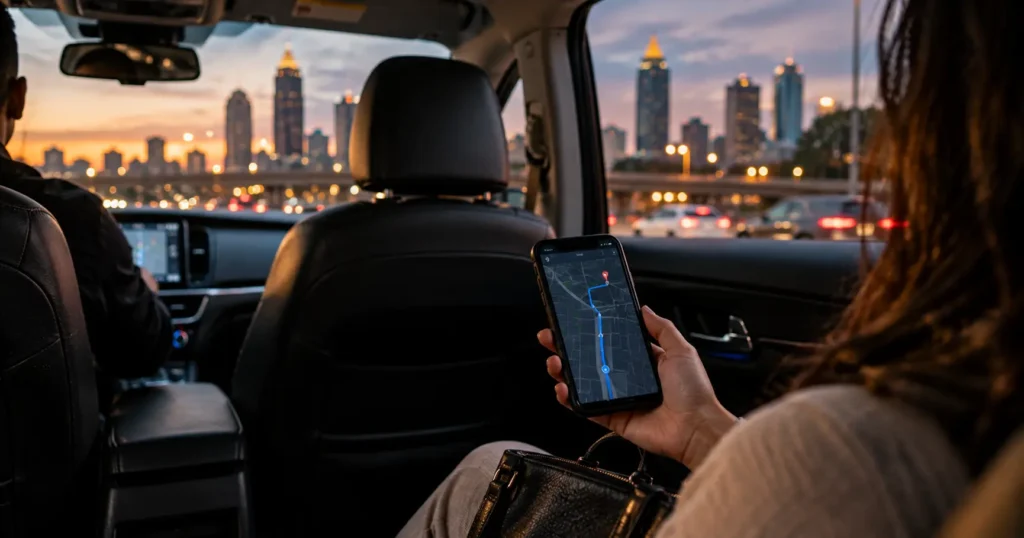
Rideshare crashes leave a digital trail that regular car crashes do not. The Uber or Lyft app can hold trip logs, GPS location, timestamps, and driver status, which help prove who was at fault and which insurance applies. Save your own trip receipt and screenshots right away, and have an attorney send a preservation letter so the companies do not lose the data.
A Rideshare Crash Leaves a Digital Trail
Most car accident claims come down to photos, a police report, and what each driver says happened. Rideshare crashes are different.
Both the driver and the passenger have phones. The app tracks the trip from the first tap to the last. It records where the car went, how fast, and when. That information can be the difference between “he said, she said” and a clear answer.
If you were hurt in an Atlanta Uber or Lyft crash, understanding Uber and Lyft accident evidence can help you protect your claim before key data disappears.
Why Evidence Matters More in a Rideshare Claim
A rideshare case is not a normal two-car case. Several questions decide who pays:
- Who caused the crash?
- Was the driver logged into the app, waiting for a ride, or carrying a passenger?
- Which insurance policy applies, and how much does it cover?
- Did the rideshare company know the driver had problems?
Each of these questions can be answered with evidence. The right proof can open the door to higher insurance coverage, which we explain in our article on the rideshare insurance gap in Atlanta.
Uber and Lyft Accident Evidence You Can Collect Yourself
Start with what you can control. Do this as soon as you are safe.
Your trip receipt and app screenshots
Open the app and take screenshots of the trip details. Capture the driver’s name, photo, license plate, car make and model, pickup and drop-off points, time, and route. Save the receipt that arrives by email. Do this before you delete anything or close your account.
Photos and video at the scene
Photograph all the vehicles, license plates, damage, skid marks, traffic signals, and road conditions. If it is safe, take a video walk-around. Look for security cameras at nearby businesses and note their locations.
Witness details
Get names and phone numbers from other drivers, pedestrians, and anyone else who saw the crash. Passengers in other cars count too.
Your own phone data
Your phone may hold a record of your location and your messages with the driver. Do not delete texts, call logs, or app messages. Back up your photos.
Medical records
Your medical records connect the crash to your injuries. Keep all visit summaries, test results, and bills.
Uber and Lyft Accident Evidence the Rideshare Company May Hold
The companies keep data you cannot access on your own. Depending on the case, that can include:
- Trip logs and timestamps. These show when the driver accepted the ride, when they arrived, and when the trip started and ended.
- GPS and location data. This can show the route, stops, and in some cases the speed of the vehicle.
- Driver status. It shows whether the app was off, on and waiting, or in the middle of a trip. This often decides which insurance policy applies.
- In-app messages and call records. These can show whether the driver was texting or distracted.
- Driver history. Background checks, past complaints, prior accidents, and safety reports.
- Safety recordings and incident reports. Some drivers use dash cameras, and the platforms may hold reports filed after the crash.
A company usually does not hand these over just because a passenger asks. In most cases, they come through a formal legal request, a subpoena, or a lawsuit.
Why a Preservation Letter Matters
Digital data does not last forever. Companies delete records on a schedule. Footage gets recorded over. A driver can delete the app, or a camera can be overwritten.
A preservation letter is a written demand sent by an attorney. It tells the rideshare company, the driver, and the insurers to keep all records connected to the crash. If they destroy evidence after getting the letter, a Georgia court may impose penalties.
The sooner the letter goes out, the more evidence is likely to survive.
For additional steps to take after a crash, see our guide on the do’s and don’ts after a rideshare accident in Atlanta.
Evidence From the Other Driver’s Car
Many rideshare crashes involve a third driver. Their car may hold useful data too.
Modern vehicles have event data recorders, often called black boxes. They can record speed, braking, and seatbelt use in the seconds before a crash. That data is normally downloaded with specialized tools, and a lawyer can request that the car be preserved.
If the Uber or Lyft driver was at fault, their own vehicle’s data can be just as important. It may help prove speeding, which we discuss in our article on proving that an Uber or Lyft driver was speeding.
Mistakes That Can Hurt Your Evidence
Small mistakes can make a claim harder. Try to avoid these:
- Deleting the app or your account. This can erase useful records on your side.
- Posting about the crash on social media. Insurers look at what you share. Photos of a normal day can be used against you.
- Giving a recorded statement too soon. Adjusters ask questions that sound friendly. Their job is to limit what they pay.
- Waiting to see a doctor. Gaps in treatment give insurers a reason to dispute your injuries.
- Accepting a quick settlement. Early offers often come before the full extent of your injuries is known.
Who Is Responsible in an Atlanta Rideshare Crash?
Responsibility may rest with one or more parties:
- The rideshare driver, if they were negligent
- Another driver who caused the crash
- The rideshare company, in some situations, such as negligent hiring or failing to act on known safety problems
- A vehicle owner, a business, or a government entity responsible for a dangerous road
Our Atlanta rideshare accident guide provides more information about liability and insurance after an Uber or Lyft crash.
Atlanta Roads Where Evidence Often Gets Complicated
Atlanta’s heavy traffic means many rideshare crashes involve more than two vehicles. Busy corridors such as the Downtown Connector, I-285, Peachtree Street, and the area around Hartsfield-Jackson Airport create situations where several drivers share blame. Sorting out who did what takes strong evidence.
Late-night pickups near Midtown and Buckhead can add questions about impaired or tired drivers, which makes records of driver status and timing even more important.
Georgia Deadlines
Most Georgia injury claims must be filed within two years of the date of the crash, under O.C.G.A. 9-3-33. Some rideshare passengers also face arbitration terms in the app’s user agreement. Our article on Uber and Lyft arbitration clauses explains how that can affect where a claim is decided.
Hurt in an Uber or Lyft Crash? Protect the Proof
With Uber and Lyft accident evidence, the strongest proof often sits on servers and phones, not on the roadside. If you were hurt, take the steps above and do not wait on the rest.
KP Law Group represents rideshare passengers, drivers, pedestrians, and other drivers hurt in Uber and Lyft crashes across Atlanta, Fulton County, DeKalb County, and Cobb County. Call us for a free case review.
Frequently Asked Questions
1. What evidence do I need after an Uber or Lyft accident in Atlanta?
Start with your trip receipt and app screenshots, photos of the scene and vehicles, witness contact information, the police report number, and your medical records. An attorney can then request deeper data, such as trip logs and GPS records, from the rideshare company.
2. Can I get my Uber or Lyft trip data myself?
You can usually see basic trip details in your own account, such as the route, time, and driver information. Detailed records, such as driver status logs and location data, generally have to be requested through your lawyer or obtained through a subpoena or lawsuit.
3. Why does the driver’s app status matter in a rideshare crash?
Whether the driver was logged off, waiting for a ride request, or carrying a passenger often decides which insurance policy applies and how much coverage is available. The app’s records can help prove that status.
4. What is a preservation letter in a rideshare claim?
It is a written demand that tells the rideshare company, the driver, and insurers to keep all evidence connected to the crash, including app data, messages, and video. If evidence is destroyed after the letter, a court can sanction that conduct.
5. How long do I have to file a rideshare accident claim in Georgia?
Most Georgia personal injury claims must be filed within two years under O.C.G.A. 9-3-33. Evidence can disappear much sooner, so it is wise to speak with an attorney as soon as possible after the crash.
Call to Action
Hurt in an Uber or Lyft crash in Atlanta? KP Law Group can move quickly to preserve the app data, video, and records that prove your claim. Call for a free case review.
404-551-4727 | Free Fierce and Fearless Case Review