


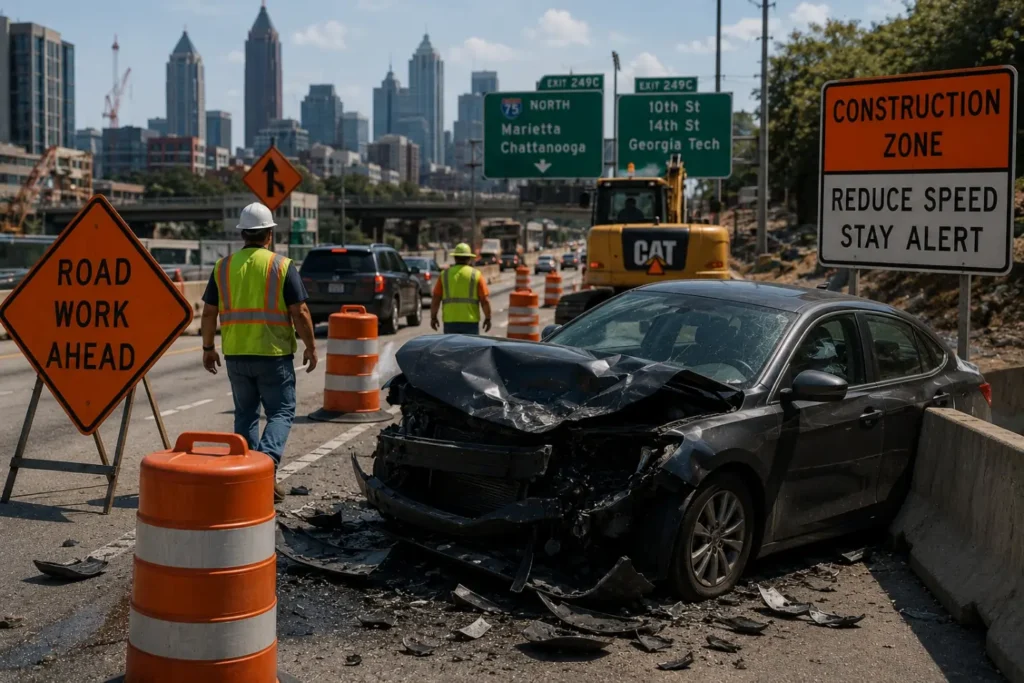
Hartsfield-Jackson Atlanta International Airport is the busiest airport in the world, and its rideshare pickup and drop-off zones are some of the most congested, high-pressure driving environments in Georgia. Crashes there often involve app-distracted drivers, aggressive merging into I-85 and I-75 traffic, and confusing multi-level roadways. Whether you were a passenger, a pedestrian, or another driver, KP Law Group can help you sort out which insurance policy applies and who is liable.
Why Hartsfield-Jackson Is a Hotspot for Rideshare Accidents
Hartsfield-Jackson handles more passenger traffic than any airport on earth, and a significant share of those travelers use Uber or Lyft to get to and from the terminal. The airport’s designated rideshare lots on the north and south ends of the domestic terminal are almost constantly full, which pushes drivers to circle, cut across lanes, and rush to reach their assigned pickup spot before their match cancels.
Add in tired travelers dragging luggage across active roadways, drivers glancing at their phone to confirm a passenger’s name and pickup location, and the sudden merge onto I-85 and I-75 south of the terminal, and the airport becomes one of the more dangerous rideshare environments in the Atlanta metro area.
Common Causes of Rideshare Accidents at the Airport
- App distraction, where a driver is looking at their phone to navigate the pickup lot or confirm a rider match
- Aggressive lane changes and cutoffs as drivers compete for a limited number of curb spaces
- Rear-end collisions in stop-and-go pickup lanes
- Pedestrian strikes involving travelers crossing between the parking deck and terminal curb
- Sudden merges onto the interstate that catch other drivers off guard
- Fatigue, since many rideshare drivers work long shifts around flight schedules, including overnight arrivals
Because the airport is owned and operated by the City of Atlanta, some claims involving airport infrastructure, such as poor lighting or signage in the rideshare lot, may also raise government liability issues with much shorter notice deadlines than a standard injury claim.
How Georgia Insurance Law Applies to Rideshare Accidents
Georgia is an at-fault state, meaning the driver who caused the crash, and their insurer, is responsible for the resulting damages. Rideshare accidents add a layer of complexity because coverage depends entirely on the driver’s status in the app at the moment of the crash.
App Off
If the driver was not logged into the Uber or Lyft app, only their personal auto insurance applies, the same as any other driver.
App On, Waiting for a Match
If the driver was logged in but had not yet accepted a ride, Uber and Lyft provide limited contingent liability coverage, typically up to $50,000 per person and $100,000 per accident, which applies only if the driver’s personal policy denies the claim.
Ride Accepted or Passenger On Board
Once a driver accepts a trip, and through drop-off, Uber and Lyft are required to provide up to $1 million in third-party liability coverage. If you were a passenger in the rideshare vehicle during this window, you are generally covered by this policy regardless of who caused the crash.
This means the exact minute the crash occurred, and the driver’s app status at that moment, can change which insurance policy applies and how much coverage is available.
What If You Were a Pedestrian Hit in the Rideshare Lot?
Travelers crossing through the pickup and drop-off zones are considered pedestrians under Georgia law, and drivers owe them a duty of care regardless of how congested the lot becomes. If a distracted or rushing rideshare driver strikes a pedestrian in the Hartsfield-Jackson curb area, the same $1 million commercial policy may apply if the driver was logged into the app and either en route to a pickup or transporting a passenger.
Evidence That Matters in an Airport Rideshare Claim
Airport crashes often have more available evidence than a typical roadway accident, including:
- Airport surveillance camera footage from the terminal curb and parking structures
- Uber or Lyft trip data showing the driver’s app status, route, and speed
- Atlanta Police Department or Airport Police crash reports
- Witness statements from other travelers, many of whom may already be filmed on nearby security cameras
- Vehicle telematics data showing braking and acceleration in the moments before the crash
Airport surveillance footage is often retained for a limited period, so requesting preservation of that footage quickly is one of the first steps an experienced rideshare attorney will take to help secure favorable case results.
Filing Deadlines for Rideshare Accident Claims in Georgia
Georgia’s general statute of limitations for personal injury claims is two years from the date of the crash. However, if City of Atlanta property or personnel are implicated, such as an airport shuttle or an Airport Police vehicle, a separate ante litem notice requirement with a much shorter deadline, often six months, may apply. Because Hartsfield-Jackson is city-owned property, it is worth having an attorney evaluate this possibility early in any airport-area claim.
FAQ
1. Q: Who is liable if my Uber or Lyft driver crashes while picking me up at Hartsfield-Jackson?
A: If the driver had accepted your trip request, Uber and Lyft’s $1 million commercial liability policy generally applies regardless of who caused the crash, since you were a paying passenger at the time.
2. Q: What if another car hit my rideshare vehicle at the airport?
A: If another driver caused the crash, that driver’s personal auto insurance is typically the primary source of compensation, though the rideshare company’s policy may provide additional coverage depending on the circumstances.
3. Q: Can I file a claim if I was walking through the rideshare pickup lot and got hit?
A: Yes. Pedestrians struck in the pickup or drop-off zones can pursue a claim against the at-fault driver, and if the driver was logged into a rideshare app, the company’s commercial insurance policy may apply.
4. Q: Does it matter that Hartsfield-Jackson is owned by the City of Atlanta?
A: It can. If airport-owned property, signage, or personnel contributed to your accident, a separate and shorter notice deadline may apply to any claim against the city, which makes prompt legal advice important.
5. Q: How long do I have to file a claim after a rideshare accident at the airport in Georgia?
A: In most cases, Georgia’s two-year statute of limitations for personal injury applies, but claims involving city or airport property may require formal notice within six months, so it is best not to wait.
Call to Action
Rideshare accidents at Hartsfield-Jackson move fast, and so does the evidence that proves your case. If you were hurt in an Uber or Lyft accident at the airport, KP Law Group will sort out the insurance coverage, preserve the surveillance footage, and fight for what you are owed. Call 404-551-4727 for a free Fierce and Fearless Case Review.