


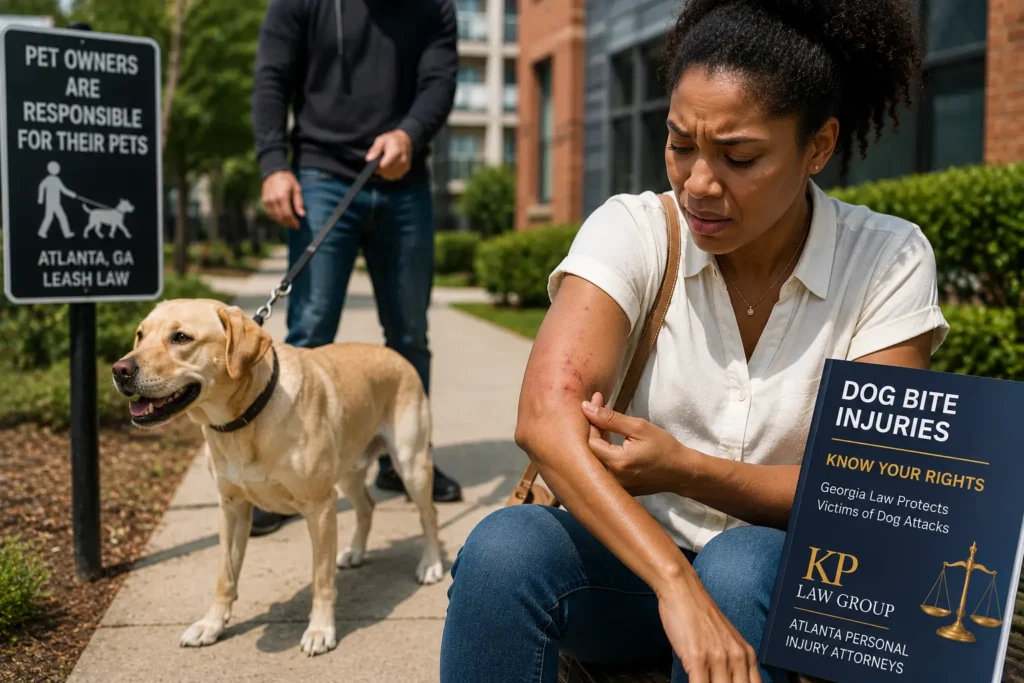
Georgia law does not assign automatic liability based on a dog’s breed, and the state actually prohibits cities and counties from passing breed-specific bans or restrictions. What determines liability in an Atlanta dog bite case is whether the owner knew, or should have known, that their dog had dangerous tendencies, regardless of breed.
Why People Assume Breed Determines Liability
After a serious dog attack, it is natural for victims to assume that certain breeds, like pit bulls, Rottweilers, or German Shepherds, automatically create a stronger legal case because of their reputation. Insurance companies sometimes reinforce this belief, since some homeowners and renters insurance policies do exclude or limit coverage for specific breeds regardless of the individual dog’s behavior history.
But when it comes to establishing legal liability in a Georgia courtroom, breed alone is not the deciding factor. What matters is what the law actually requires you to prove.
Georgia’s Modified One-Bite Rule
Georgia follows a modified version of the one-bite rule under O.C.G.A. § 51-2-7. Under this law, a dog owner can be held liable for injuries their dog causes if the owner knew, or reasonably should have known, that the dog had dangerous or vicious tendencies. This can be shown through a prior bite, aggressive behavior, growling or lunging incidents, or the dog being kept in a way that suggests the owner recognized it as dangerous, such as posting warning signs or keeping it chained or muzzled.
Importantly, this standard applies the same way regardless of the dog’s breed. A small dog with a documented history of biting can create liability just as easily as a large dog with no prior incidents may not, depending on what the owner knew.
Georgia Law Actually Prohibits Breed-Specific Legislation
In 2012, Georgia passed a law preventing local governments, including cities and counties, from enacting breed-specific ordinances that single out particular breeds for bans, mandatory restrictions, or increased liability. This means Atlanta, Fulton County, DeKalb County, and other Georgia municipalities cannot pass local laws that treat a pit bull differently than a Labrador retriever under dangerous dog classification rules.
This is a significant point for Atlanta dog bite victims to understand. Your legal claim does not become stronger simply because the dog that bit you belongs to a breed with a reputation for aggression, and it does not become weaker if the dog was a breed generally considered gentle. The law asks about the specific dog’s known behavior and the specific owner’s knowledge, not breed stereotypes.
What Actually Strengthens a Georgia Dog Bite Claim
Since breed alone will not carry a case, Atlanta dog bite victims and their attorneys focus on gathering evidence that shows the owner’s actual or reasonable knowledge of danger, including:
- Animal control or police records showing prior bites, complaints, or aggressive incidents involving the same dog
- Statements from neighbors, mail carriers, delivery drivers, or previous visitors describing past aggressive behavior
- Evidence that the dog was kept behind warning signage, on a chain, or muzzled, suggesting the owner recognized a risk
- Veterinary records that may reference aggressive behavior noted during appointments
- The Responsible Dog Owner Act classification process, if the dog had previously been reported and evaluated by animal control as dangerous or vicious under Georgia’s dangerous dog statute
Homeowners Insurance and Breed Exclusions
While Georgia law does not treat breed as a factor in determining owner liability, many private insurance policies do. Some homeowners and renters insurance carriers exclude coverage or require higher premiums for certain breeds. This does not affect whether the dog owner is legally liable for your injuries, but it can affect whether there is insurance coverage available to actually pay a judgment or settlement.
If an owner’s insurance policy excludes their dog’s breed, your attorney may need to pursue the claim directly against the owner’s personal assets, or investigate whether a separate policy, such as a renter’s landlord policy in certain premises liability situations, may apply instead.
What to Do After a Dog Attack in Atlanta, Regardless of Breed
- Seek medical treatment immediately and keep all records, since untreated bites can lead to serious infection.
- Report the attack to Atlanta Animal Control or the relevant county animal control office, regardless of the dog’s breed.
- Get the owner’s contact and insurance information if possible.
- Document the scene, your injuries, and any visible signs the dog had a history of aggressive behavior, such as posted warnings.
- Contact a dog bite attorney promptly, since Georgia’s statute of limitations for personal injury claims is generally two years from the date of the bite.
FAQ
Q1: Is it harder to win a dog bite case in Georgia if the dog was a “dangerous breed”?
A: No. Georgia law focuses on whether the owner knew or should have known the specific dog was dangerous, not on the dog’s breed. Breed reputation alone does not determine liability.
Q2: Can Atlanta or Fulton County ban specific dog breeds?
A: No. Georgia state law prohibits local governments from passing breed-specific bans or restrictions, meaning breed cannot legally be the basis for local dangerous dog ordinances.
Q3: Does my dog bite case get weaker if the dog was a breed known for being gentle?
A: Not necessarily. If the owner knew or should have known the specific dog had aggressive tendencies, breed reputation does not change the legal analysis.
Q4: What if the homeowner’s insurance excludes the dog’s breed?
A: A breed exclusion may limit available insurance coverage to pay a claim, but it does not eliminate the owner’s legal liability. Your attorney can help evaluate what other coverage or assets may be available.
Q5: How do I prove the owner knew their dog was dangerous?
A: Evidence like prior bite reports, animal control records, witness statements about past aggressive behavior, or signs of the owner restraining the dog can all help establish the owner’s knowledge.
Call to Action
If you or a loved one was bitten by a dog in Atlanta, your claim is not determined by the dog’s breed. It is determined by what the owner knew and what evidence can prove it. KP Law Group investigates every dog bite case thoroughly, regardless of breed, to build the strongest possible claim.
Learn more about our Dog Bite representation and how we help clients with serious Dog Bite Facial Injuries. You can also review our Case Results to see how we have helped injured clients recover compensation.
Call 404-551-4727 or schedule your Free Fierce and Fearless Case Review today.