


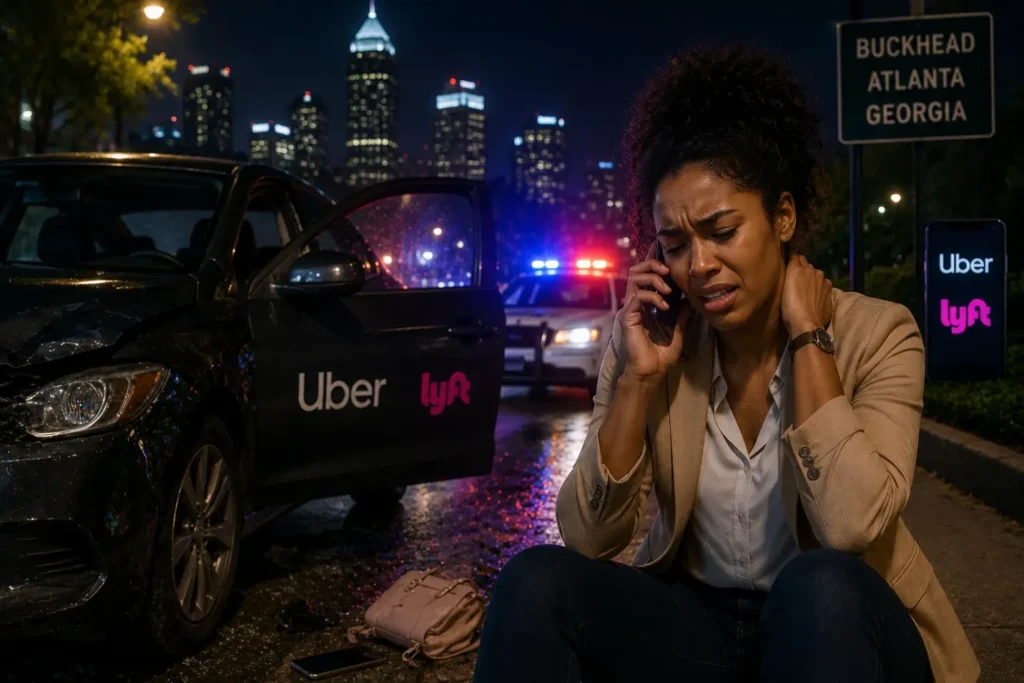
When an Uber or Lyft driver is drunk or impaired in Atlanta, victims have claims against both the driver and potentially the rideshare company under Georgia law. Rideshare drivers are held to a higher standard of care as common carriers, and a DUI or impairment by drugs can serve as powerful evidence of negligence. Both passengers and third parties injured by a drunk rideshare driver may be entitled to significant compensation through the driver’s personal coverage and Uber or Lyft’s $1 million liability policy. Learn more about your rights after a rideshare accident in Atlanta.
Being Hurt by a Drunk Rideshare Driver Is a Specific Legal Situation
Getting into an Uber or Lyft requires trust. You are voluntarily entering a vehicle operated by someone you have never met. Georgia law recognizes that rideshare companies and their drivers have elevated responsibility for passenger safety. When that trust is violated because a driver is drunk, impaired by drugs, or under the influence while carrying passengers or traveling on the app, the legal consequences extend far beyond a standard car accident claim.
Georgia Law and the Higher Standard for Rideshare Drivers
Under Georgia law, rideshare drivers operating through Uber and Lyft are considered common carriers when actively transporting passengers. Common carriers are held to a higher standard of care than ordinary drivers. This means driving while impaired represents a more serious form of negligence. For third parties such as pedestrians or occupants of other vehicles struck by a drunk rideshare driver, the same insurance coverage applies and standard Georgia negligence rules govern the claim.
Georgia’s DUI Standard and How It Affects Your Civil Case
Georgia law makes it illegal to operate a vehicle with a BAC of 0.08% or higher for standard drivers (0.04% for commercial drivers). Driving under the influence of any substance that impairs driving ability is also a DUI offense under O.C.G.A. § 40-6-391.
In a civil personal injury case, a DUI arrest or conviction is significant evidence. It can establish negligence through the doctrine of negligence per se: when a person violates a statute designed to protect the public and that violation causes harm, the violation itself is evidence of negligence. You do not need to wait for the criminal case to conclude before filing your civil claim.
What Insurance Coverage Applies?
Mode 1: App Off
Only the driver’s personal insurance applies.
Mode 2: App On, No Passenger Accepted
Uber and Lyft provide contingent liability coverage of $50,000 per person, $100,000 per accident, and $25,000 for property damage if the driver’s personal insurance does not cover the loss.
Mode 3: En Route to Passenger or Passenger in Vehicle
Uber and Lyft provide $1 million in liability coverage per accident. For passengers injured by a drunk rideshare driver in Mode 3, the $1 million policy is the controlling coverage. This creates real potential for substantial compensation.
Can Uber or Lyft Be Held Directly Responsible?
Uber and Lyft classify drivers as independent contractors, which historically limited direct liability. However, direct claims against Uber or Lyft may still be viable through negligent hiring or retention (if the company failed to conduct adequate background checks or allowed a driver with a known DUI history to continue operating) and negligent supervision (if the company’s policies failed to detect or prevent impaired driving on its platform).
Summer 2026: Why Drunk Rideshare Driver Accidents Rise in Atlanta
July in Atlanta means Braves games at Truist Park, outdoor concerts, Midtown festivals, and Fourth of July gatherings. Rideshare demand surges, but so does the risk. Some rideshare drivers, incentivized by surge pricing during high-demand events, make the dangerous choice to drive while impaired. Atlanta police step up DUI enforcement during major summer events, but enforcement does not undo the harm done to victims.
What Evidence Should Be Preserved?
- Rideshare app records, including screenshots of your trip, receipt, and driver information.
- Police and DUI reports, including BAC results and field sobriety test records.
- Dashcam footage from the rideshare vehicle.
- Witness statements from passengers, bystanders, or other drivers.
- Medical records documenting your injuries.
- Uber or Lyft’s internal records obtained during discovery, including driver history and prior complaints.
Steps to Take After Being Injured by a Drunk Rideshare Driver
- Call 911 so law enforcement can begin a DUI investigation.
- Preserve your rideshare app records by taking screenshots of the trip and driver information.
- Seek emergency medical treatment immediately.
- Document the accident scene with photographs of vehicle damage, road conditions, and injuries.
- Do not accept a quick settlement offer from an insurance company.
- Contact KP Law Group as soon as possible to protect your rights.
Frequently Asked Questions
-
Can I sue Uber or Lyft if their driver was drunk?
Yes. You can pursue claims against both the driver and Uber or Lyft. You may have access to the company’s commercial insurance policy of up to $1 million when the driver was actively transporting passengers or en route to a pickup. Depending on the circumstances, direct claims against Uber or Lyft for negligent hiring or supervision may also be available.
-
What if I was a pedestrian or in another car when a drunk Uber driver hit me?
Third parties have the same access to the rideshare company’s commercial insurance coverage when the driver was logged into the app and operating within the covered period.
-
Does a DUI conviction help my civil lawsuit?
Yes. A DUI conviction or guilty plea can establish negligence per se, making it easier to prove liability and often increasing the value of your injury claim.
-
What if the rideshare driver was impaired by prescription drugs?
Georgia law prohibits driving while impaired by any substance, including legally prescribed medications, if those substances affect the driver’s ability to operate a vehicle safely.
-
How long do I have to file a claim against Uber or Lyft?
Most Georgia personal injury claims must be filed within two years of the accident. Because rideshare companies preserve electronic evidence for a limited time, contacting an attorney immediately is critical.
Call to Action
Being injured by a drunk or impaired rideshare driver in Atlanta is serious and often involves complex insurance and liability issues. Our team has experience handling cases involving multiple defendants and corporate insurance policies. View our case results to see how we have helped injury victims recover substantial compensation.
If your injuries were caused by a commercial vehicle or another company driver’s negligence, you may also find our guide on suing a trucking company in Georgia helpful.
Call KP Law Group for a FREE case review: 404-551-4727
KP Law Group | Atlanta’s Fierce and Fearless Personal Injury Team