


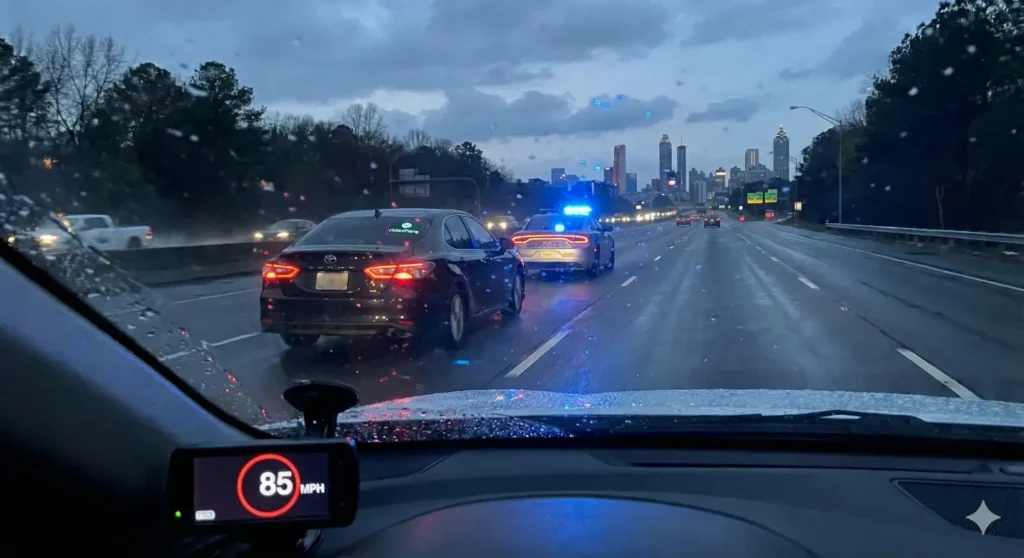
Speeding is a common cause of Uber and Lyft accidents. When a rideshare driver was speeding, liability may be clear, but proving it requires evidence. KP Law Group knows how to build strong rideshare cases.
Speeding Is a Major Factor in Rideshare Accidents
Rideshare drivers often feel pressure to:
- Complete trips quickly
- Accept back-to-back rides
- Meet app-based expectations
That pressure can lead to dangerous driving behavior.
How Speeding Is Proven in Rideshare Cases
KP Law Group investigates multiple data sources, including:
- App data and trip records
- Vehicle black box information
- Traffic camera footage
- Witness statements
- Accident reconstruction reports
Speed is often provable, even when drivers deny it.
Which Insurance Policy Applies
If the driver was actively transporting a passenger or en route to pick one up, Uber or Lyft’s commercial policy may provide up to $1 million in coverage.
KP Law Group confirms app status quickly to prevent coverage disputes.
Why Insurance Companies Push Back
Insurers often argue:
- Speed cannot be proven
- Another driver caused the crash
- Injuries are exaggerated
We counter these arguments with facts, not opinions.
What To Do After a Speed-Related Rideshare Accident
- Call 911 and request a report
- Take screenshots of the ride in the app
- Document the scene and injuries
- Seek medical care immediately
- Call KP Law Group before giving statements
Speed-related evidence disappears quickly.
FAQ
Q: What if the driver wasn’t cited for speeding?
A: A citation is not required to prove negligence.
Q: Can passengers be at fault?
A: Almost never.
Q: Does speeding increase case value?
A: It often strengthens liability and leverage.
Call to Action
When speed causes injury, accountability matters.
404-551-4727 | Free Fierce and Fearless Case Review