


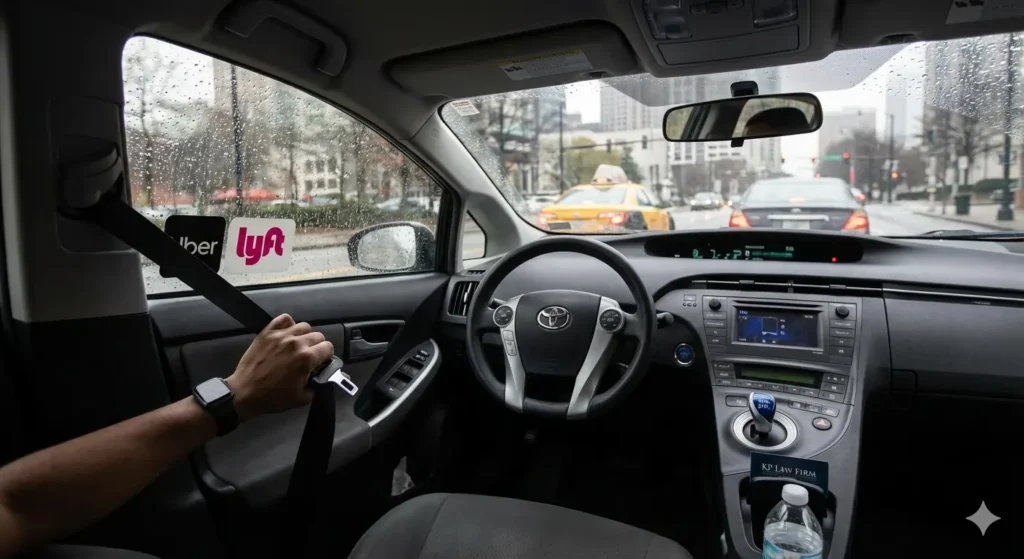
Not wearing a seatbelt does not automatically bar you from compensation after a rideshare accident. Passengers still have rights. KP Law Group knows how to fight back against unfair blame-shifting.
Insurance Companies Love This Argument
After a rideshare accident, insurers often jump to one question:
“Were you wearing a seatbelt?”
They use this to reduce payouts or shift blame, even when the driver caused the crash.
That tactic does not end your case.
How Georgia Law Looks at Seatbelt Use
Georgia uses a comparative fault system.
This means:
- You may still recover compensation
- Fault is evaluated based on the full situation
- Liability often remains with the driver
Passengers are rarely responsible for causing a crash.
When Uber or Lyft Insurance Still Applies
If the rideshare driver was logged into the app and transporting or picking up a passenger, Uber or Lyft’s commercial insurance may apply.
That coverage can include up to $1 million, regardless of seatbelt use.
Why Legal Representation Matters
Insurance companies may argue:
- Your injuries would have been less severe
- You share responsibility
- Your claim value should be reduced
KP Law Group counters these arguments with medical evidence, accident data, and legal strategy.
What Injured Passengers Should Do
- Seek medical care immediately
- Screenshot your ride details in the app
- Avoid discussing fault with insurers
- Follow all medical advice
- Call KP Law Group
What you say early can impact your claim.
FAQ
Q: Will not wearing a seatbelt kill my case?
A: No.
Q: Can compensation be reduced?
A: Possibly, but that depends on the facts.
Q: Are passengers usually blamed?
A: Rarely.
Call to Action
Don’t let insurance companies decide what your injuries are worth.
404-551-4727 | Free Fierce and Fearless Case Review