


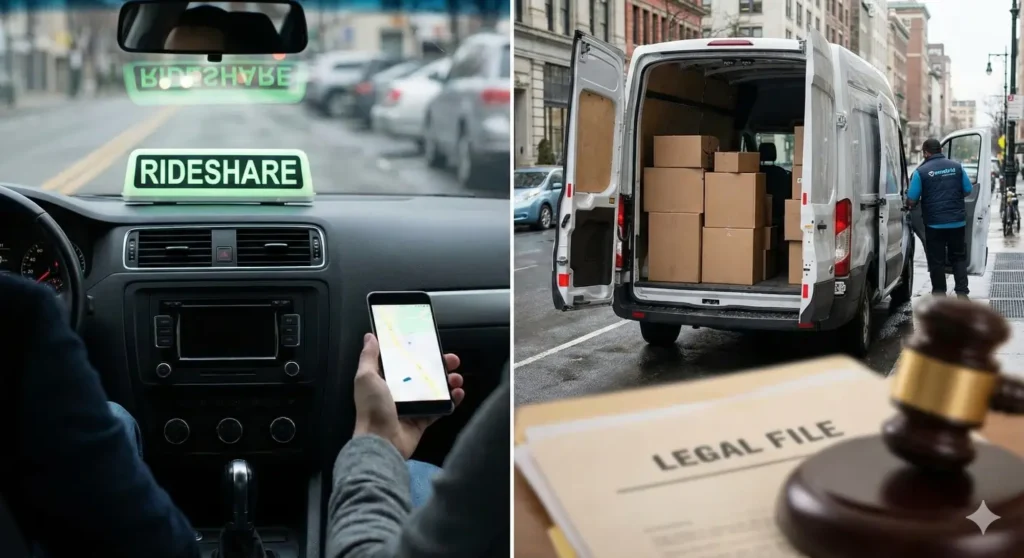
Not All App-Based Drivers Are the Same
After an accident, many victims assume all “app drivers” fall under the same rules.They don’t.
Uber and Lyft accidents follow different insurance structures than food or package delivery drivers.
Understanding the distinction matters.
How Rideshare Insurance Works
Uber and Lyft provide layered insurance based on the driver’s app status.
If the driver was:
- Logged out, personal insurance applies
- Logged in and waiting, limited company coverage may apply
- Actively transporting a passenger, up to $1 million in coverage applies
Passengers are almost never at fault.
How Delivery Driver Insurance Differs
Delivery drivers may be working for:
- Restaurants
- Grocery services
- Retail platforms
- Independent contractors
Coverage depends on:
- Whether the driver was on the job
- Company policies
- Commercial insurance agreements
These cases often involve more disputes and denials.
Why Insurance Companies Exploit the Confusion
Insurers often delay claims by arguing:
- The driver wasn’t working
- The wrong policy applies
- Coverage was limited
KP Law Group cuts through the noise by identifying:
- App data
- Delivery records
- Employment relationships
- Applicable commercial policies
What To Do After an App-Based Driver Accident
- Call 911 and request a report
- Document the app status if possible
- Take photos of vehicles and injuries
- Seek medical care immediately
- Call KP Law Group before speaking to any insurer
Early investigation prevents coverage games.
FAQ
Q: What if I don’t know which app the driver was using?
A: We find out through records and subpoenas.
Q: Can multiple insurance policies apply?
A: Yes. We often pursue more than one.
Q: Are these cases harder to resolve?
A: They require experience, not guesswork.
Call to Action
App-based companies protect themselves first. We protect you.
404-551-4727 | Free Fierce and Fearless Case Review